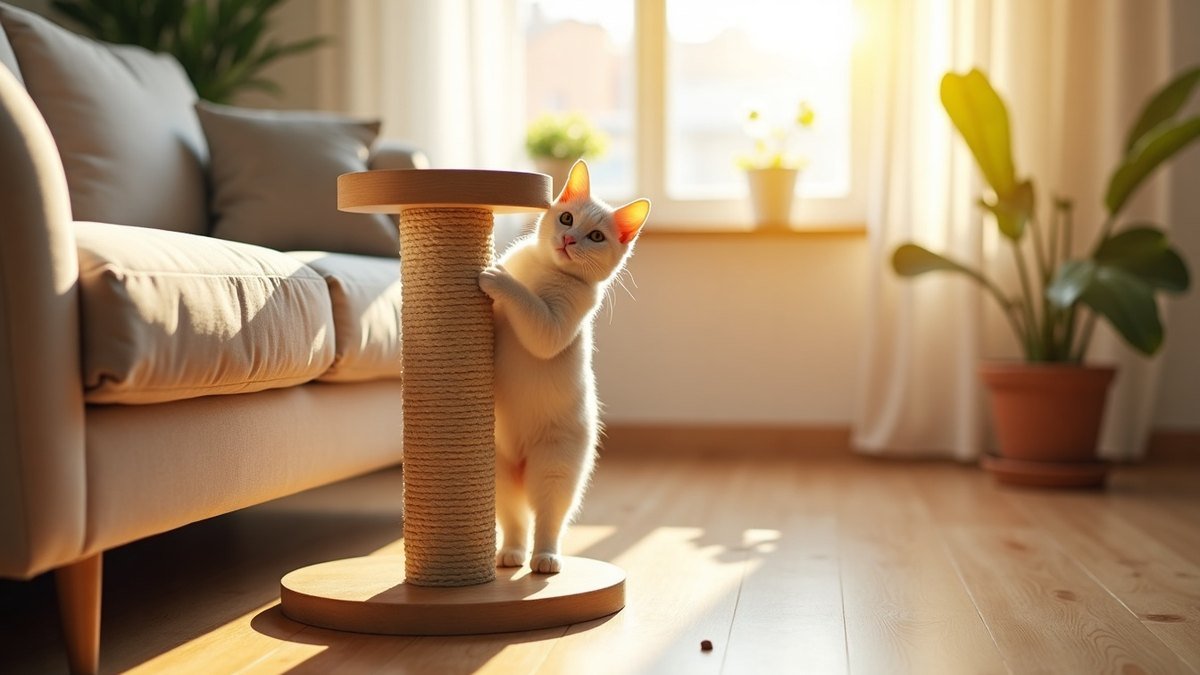
If you have ever walked into your living room to find fresh claw marks down the side of your favorite chair, I feel your pain, and so does every cat owner I have ever met. People used to come into the clinic genuinely exasperated, wondering what was wrong with their cat and whether anything short of drastic measures could save their furniture. The frustration is completely understandable. What surprised most of them was learning that their cat was not being destructive or spiteful at all. They were just being a cat.
Here is the truth I always led with. You cannot, and should not, stop a cat from scratching, because it is a deep, healthy, necessary instinct. What you can absolutely do is redirect it, giving your cat irresistible places to scratch that are not your sofa, and gently making the furniture far less appealing. Done right, this works beautifully and humanely, with no squirt bottles, no punishment, and certainly no declawing. Let me walk you through the eight proven methods I relied on to make peace between cats and couches.
The short answer
- Scratching is a normal, healthy instinct, so the goal is to redirect it, never to punish it or declaw your cat.
- Provide sturdy, tall scratching posts in the materials and orientations your cat prefers, placed near the furniture they target.
- Make the furniture unattractive with double-sided tape or covers, and make the posts attractive with catnip and praise.
- Keep nails trimmed, consider soft nail caps, and reward your cat for using the right spots.
Why cats scratch in the first place
To solve this, you have to understand it, because every effective method works with the instinct rather than against it. Cats scratch for several important reasons, none of which are about ruining your home. Scratching helps them shed the dead outer layers of their claws to keep them healthy, it lets them stretch the muscles of their legs, shoulders, and back, and it marks territory both visually and through scent glands in their paws. It also simply feels good and relieves stress.
Once you see scratching as the natural, healthy behavior it is, the whole problem reframes itself. Your cat is not misbehaving, and trying to stamp out scratching entirely would be like trying to stop a dog from sniffing. It is hardwired and beneficial. The reason your cat targets the sofa is usually that the sofa is the best scratching surface available, in the right spot, with the right texture. Your job is simply to offer something better and make the furniture worse by comparison.
The 8 proven methods to stop furniture scratching
1. Never punish, and never declaw
I want to start here because it is the most important thing. Punishing a cat for scratching, with yelling, squirt bottles, or anything else, does not work and damages your relationship. The cat does not understand they have done something wrong, since scratching is natural to them, and punishment only teaches them to fear you or to scratch when you are not watching. It addresses none of the underlying need and usually makes any related stress worse.
Declawing deserves a firm word too. It is not a simple nail removal. It is the surgical amputation of the last bone of each toe, and it can cause lasting pain, behavioral problems, and litter box issues, which is why it is increasingly discouraged and even banned in many places. There is always a humane alternative, and this entire article is built on them. Please set aside punishment and declawing entirely. The kind methods that follow genuinely solve the problem.
2. Provide the right scratching posts
The single most effective step is offering scratching surfaces that are actually better than your furniture, and most posts people buy fall short. A good post must be tall enough for your cat to stretch fully upright, which means at least around thirty inches for a grown cat, and rock solid, because a wobbly post that tips during use will scare a cat off it forever. Stability is non-negotiable, since cats scratch with real force and need something that holds firm.
Material matters enormously too. Many cats love sisal rope or sisal fabric, which has a satisfying texture and resembles the bark and surfaces they would use in nature, while others prefer cardboard or carpet. A sturdy sisal post is where I would start, and you can find well-reviewed ones on Amazon. Think about why your cat likes the sofa, often its firmness and rough weave, and choose a post that delivers the same satisfying resistance. Get this right and you are most of the way there.
3. Offer variety in type and orientation
Cats have individual preferences, and a common mistake is offering only one kind of scratcher. Some cats are vertical scratchers who like to reach up tall, while others are horizontal scratchers who prefer to claw flat surfaces on the ground, and some enjoy angled ones. The way your cat attacks your furniture is a clue. If they target the side of the couch, they want vertical; if they shred the rug, they want horizontal. Match what you provide to what they already do.
Offering a few different options, a tall sisal post, a flat cardboard scratcher, maybe an inclined one, lets your cat choose, which dramatically increases the odds they use one. Variety in material helps too. It costs a little more upfront, but giving your cat genuine choice is far cheaper than replacing furniture. Watch which ones they gravitate to, then add more of that kind. Let your cat tell you their preference rather than guessing and hoping.
4. Place the posts strategically
Location can make or break the whole effort, and it is the step people most often get wrong. Tucking a scratching post away in a spare room because it does not match the decor is a recipe for failure. Cats want to scratch in prominent, socially important areas, which is exactly why they choose the living room sofa. So place posts where your cat actually wants to scratch, right next to the furniture they have been targeting, at least at first.
Cats also love to scratch when they wake up and stretch, so positioning a post near their favorite sleeping spot is highly effective. Put scratchers in the rooms where you and your cat spend the most time, not hidden away. Once your cat is reliably using a well-placed post, you can gradually move it a few inches at a time toward a more convenient spot if you must. But start by meeting your cat exactly where the scratching is happening.
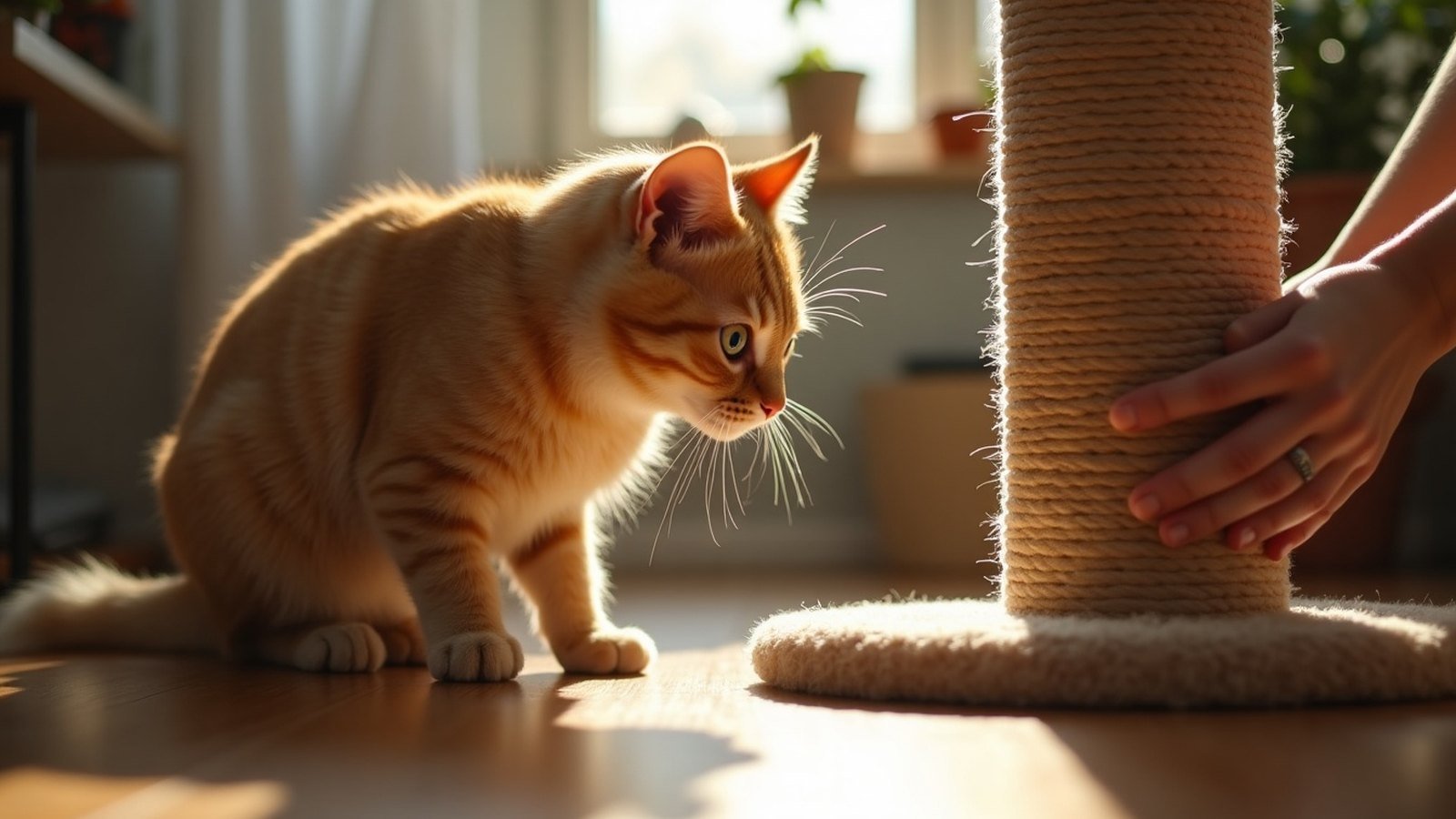
5. Make the furniture unappealing
While you make the posts attractive, you also gently make the furniture a disappointing place to scratch, which speeds things up considerably. Cats dislike sticky, crinkly, and slippery textures on their paws, so double-sided tape applied to the targeted areas is remarkably effective, and products like sticky strips are made exactly for this. Aluminum foil, plastic carpet runners placed nub-side up, or furniture covers can also discourage scratching by making the surface unpleasant.
These deterrents are temporary training tools, not forever fixes. The idea is to make the furniture unrewarding at the same moment the new post becomes irresistible, so the choice becomes obvious to your cat. Once your cat has firmly switched to the post, you can usually remove the tape or covers. Avoid scent deterrents that are unpleasant or unsafe, and never use anything that could harm your cat. The goal is gentle discouragement paired with a far better alternative, working together.
6. Attract your cat to the posts
Making the new scratchers actively enticing tips the balance in your favor. Catnip is your best friend here. Rubbing dried catnip on a post, or choosing one infused with it, draws many cats in to investigate and, soon enough, to scratch. Sprinkling a little catnip at the base or hanging a favorite toy from the top encourages interaction and helps your cat form a positive association with the post as a fun, rewarding place.
Synthetic pheromone products can help too, particularly the kind designed to encourage scratching in the right spot or to reduce the stress-marking that drives some scratching. If your cat scratches more when anxious, easing that stress matters, and pheromone diffusers can be part of the solution. Stress often shows up in more than one behavior at once, so if your cat is also having litter trouble, my guide to cat litter box problems tackles the same underlying tension.
7. Keep nails trimmed and consider nail caps
Regular nail trims reduce the damage scratching does and are a kind habit to build, even though they will not stop the behavior itself. Trimming the sharp tips every couple of weeks blunts the claws so that any scratching does less harm, and it is good routine care besides. Introduce trimming gently and with treats, especially if your cat is new to it, and trim only the clear tip to avoid the sensitive quick. Many cats accept it well with patience.
For furniture you really want to protect, soft vinyl nail caps, sold under names like Soft Paws, glue painlessly over the claws and prevent damage while still letting the cat go through the scratching motion. They last several weeks before needing replacement and come in fun colors, and you can find them easily on Amazon. They are not for every cat, and some need help applying them, but for a determined scratcher they can be a genuinely useful, humane tool while training takes hold.
8. Reward and redirect, consistently
Positive reinforcement is the glue that holds all of this together. Whenever you catch your cat using the scratching post, reward them immediately with praise, a treat, or play, so they learn that scratching the post brings good things. Cats respond far better to reward than to correction, and this gentle consistency builds the new habit faster than anything else. Make using the post the most rewarding option available, and your cat will choose it.
If you catch your cat scratching the furniture, do not scold. Calmly redirect them to the post, perhaps by enticing them over with a toy, and reward them the moment they use it. Be patient, since changing a habit takes time and consistency, often a few weeks. A bored cat scratches more, so plenty of play and enrichment helps too. Even something as simple as predictable mealtimes can settle a cat, which is one reason I am a fan of a good automatic feeder for routine.
How to introduce a new scratching post
Bringing home a great post is only half the job. How you introduce it decides whether your cat adopts it or ignores it. Start by placing the post right beside the furniture your cat has been targeting, not in a far corner, so it competes directly with the spot they already love. Make it interesting from day one by rubbing dried catnip into the surface, dangling a favorite toy from it, and sitting nearby to play so your cat associates the post with good things.
Resist the urge to grab your cat's paws and drag them across the post, which many cats find unpleasant and which can backfire by creating a negative association. Instead, lure them to it with a wand toy, letting their claws naturally catch the surface, and praise or treat the instant they make contact. Reward every interaction generously in the early days. You are teaching your cat that this object is rewarding, fun, and theirs, which is far more persuasive than any forced demonstration.
Be patient and consistent over the first couple of weeks. Once your cat is reliably using the post, you can very gradually move it, just a few inches at a time over several days, toward a more convenient location if the original spot does not suit your home. Move it too fast and your cat may abandon it, so go slowly. With a well-chosen post, a great location, and steady encouragement, most cats happily make the switch and leave the furniture alone.
Special cases: kittens, multi-cat homes, and renters
A few situations call for small adjustments. Kittens are wonderfully easy to train because they have not yet formed strong furniture habits, so offer good posts early, reward enthusiastically, and you can prevent the problem before it ever starts. Establishing the right scratching outlets in kittenhood is far simpler than redirecting an adult cat who has spent years perfecting their assault on the armchair, so seize that early window if you have a young cat.
Multi-cat households need more scratchers, not just one, since cats both compete for resources and have individual preferences. Provide several posts of different types in different rooms, so no cat has to share or travel far, and so each can choose the surface and orientation they like. Scratching is also territorial marking, which means having enough posts spread around can actually reduce tension between cats. Skimping on scratchers in a multi-cat home almost guarantees that someone turns to the sofa instead.
If you rent and worry about furniture and walls, you have plenty of humane options that protect deposits without harming your cat. Lean on double-sided tape and removable covers to shield vulnerable surfaces, place sturdy posts at the corners cats love, keep nails trimmed, and consider soft nail caps for extra insurance. Cat-friendly, damage-resistant setups are entirely achievable in a rental. The same kind methods that work anywhere work here, and they keep both your landlord and your cat content.
Common mistakes that send cats back to the couch
A few avoidable missteps keep cats clawing the furniture despite an owner's best efforts. The most frequent is buying a cheap, short, or wobbly post that cannot match what the sofa offers, then concluding the cat just will not use a post. A scratcher has to be tall enough for a full stretch and rock solid, or your cat will rightly reject it. Spending a little more on one excellent post beats wasting money on several flimsy ones your cat ignores.
Placement mistakes come a close second. Tucking the post in a basement or spare room, far from where the scratching happens, dooms it from the start, because cats want to scratch in prominent, central spots. So does removing furniture deterrents too soon, before the new habit is firmly set, which simply hands the couch back as an option. Keep the tape or covers on until your cat has reliably chosen the post for a good while.
The biggest mistake of all is reaching for punishment when redirection is what works. Squirt bottles, yelling, and especially declawing address none of the underlying instinct and damage your bond or your cat's well-being. Cats learn through reward, not fear. Give them a better option, make the furniture dull, attract them with catnip, and praise every good choice. Patience over a couple of weeks, not punishment in the moment, is what genuinely retrains a determined scratcher for good.
Frequently asked questions
Why does my cat scratch the furniture and not the post I bought?
Usually because the post is not meeting your cat's needs the way the furniture does. The most common culprits are a post that is too short for a full stretch, too wobbly, made of a material your cat dislikes, or placed in an out-of-the-way spot. Your sofa, by contrast, is tall, rock solid, satisfyingly textured, and right in the middle of family life. Match those qualities with a sturdy, tall post in your cat's preferred material, place it next to the targeted furniture, and most cats happily switch.
Will a spray bottle stop my cat from scratching?
I really discourage the spray bottle, because it does not solve the problem and can harm your relationship with your cat. At best it teaches your cat to avoid scratching only when you are watching, while doing nothing about the underlying need to scratch. At worst it makes your cat anxious or fearful of you, which can create new behavior problems. Cats respond far better to positive methods: give them an irresistible post, make the furniture unappealing, and reward the behavior you want. That approach actually works and keeps trust intact.
Is declawing a humane option to protect my furniture?
No, and this is important. Declawing is not a simple nail removal; it is the surgical amputation of the last bone of each toe, and it can cause chronic pain, lasting behavioral changes, and litter box aversion. It is increasingly discouraged by veterinary organizations and banned in many places. There is always a humane alternative, including the methods in this article, plus options like soft nail caps. Protecting your furniture never has to come at the cost of your cat's comfort and well-being. Please choose the kind solutions instead.
How long does it take to train a cat to use a scratching post?
It varies by cat, but with consistency many cats start switching within a few weeks. Some take to a well-chosen, well-placed post almost immediately, especially with catnip and rewards, while stubborn or older cats with long-established habits may take longer. The keys to speed are getting the post right, placing it where the scratching happens, making the furniture unappealing at the same time, and rewarding every use of the post. Patience and consistency matter most. Do not give up after a few days, since habit change naturally takes a little time.
My cat suddenly started scratching more than usual. Should I worry?
A sudden increase in scratching is worth a closer look, because while scratching is normal, a spike can signal stress or anxiety from a change in the household, or occasionally an underlying issue. Cats often express stress through behavior, so think about what might have changed, a move, a new pet, a disrupted routine, and address it. If the extra scratching comes with other changes, like litter box trouble, hiding, or appetite shifts, or anything else seems off, check with your vet. Recognizing other warning signs, like those in my guide to why cats throw up, helps you tell normal from concerning.
Do anti-scratch deterrent sprays actually work?
They can play a small supporting role, but I would not lean on them as your main strategy. Some cats dislike certain scents and will avoid a sprayed area, while others ignore them entirely, so results are inconsistent. Deterrents also do nothing to satisfy your cat's genuine need to scratch, which is the real key to success. If you use a spray, treat it as one minor part of a bigger plan built around irresistible scratching posts, smart placement, physical deterrents like double-sided tape, and rewarding good choices. The lasting fix is always redirection to a better surface, not simply trying to repel your cat from a worse one.
The bottom line
The secret to saving your furniture is not stopping your cat from scratching, which is impossible and unkind, but redirecting that healthy instinct to places you both can live with. Give your cat sturdy, tall posts in the materials and orientations they love, place them right where the scratching happens, make the furniture unappealing while making the posts irresistible, keep those nails trimmed, and reward every good choice. Done together, these humane methods genuinely work.
Be patient and consistent, and remember that your cat is not out to destroy your home. They are simply following an instinct as old as cats themselves, and they will happily redirect it once you offer something better. No squirt bottles, no punishment, and absolutely no declawing required. For more compassionate, practical advice on understanding and living happily with your cat, explore the rest of the Qaliona cat care section. Your furniture, and your cat, will both thank you.