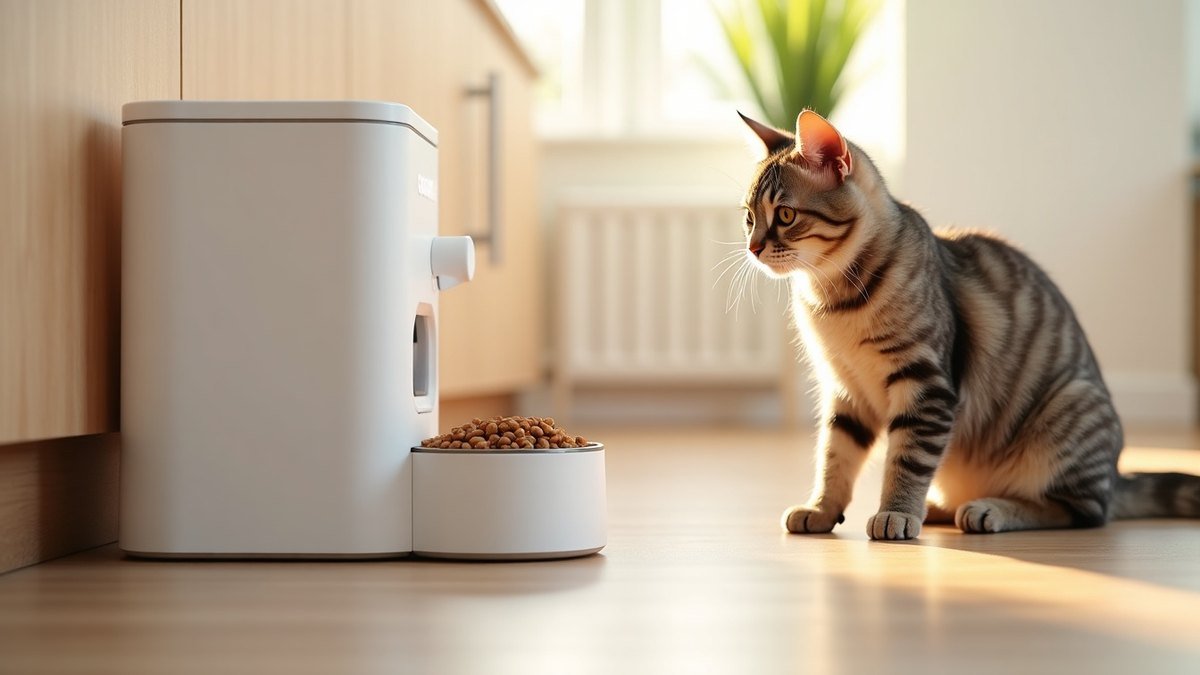
I became a believer in automatic feeders the hard way. Years ago I had a cat with a thunderous internal alarm clock who decided breakfast should be served at five in the morning, every morning, with operatic insistence. I was exhausted, and so were my neighbors. A reliable automatic feeder gave that cat his early breakfast and gave me back my sleep, and I never looked back. Since then I have recommended them to countless owners juggling work, travel, and pets with very firm opinions about mealtime.
That said, not all feeders are created equal, and I have also seen the bad ones cause real problems, from jams that leave a pet unfed to wildly inaccurate portions. A feeder is only worth having if you can actually trust it, because your pet depends on it. So let me share the seven automatic feeders I trust most, who each one suits, and the features that separate a dependable feeder from a frustrating one, drawn from years of helping owners feed their pets well.
The short answer
- My top pick is the PETLIBRO Granary Automatic Feeder, a dependable dry-food feeder with accurate portions, a desiccant bag for freshness, and dual power.
- The best budget choice is the WOPET Automatic Pet Feeder, which covers the basics reliably at a friendly price.
- For multi-pet homes, the premium SureFeed Microchip Pet Feeder opens only for the right pet and handles wet food.
- A feeder is a helpful tool, not a replacement for daily attention. Always keep fresh water available and check on your pet.
Why an automatic feeder can be a game changer
The benefits go well beyond convenience, though convenience is lovely. A consistent feeding schedule is genuinely good for pets, supporting steady digestion and helping prevent the begging and anxiety that come with unpredictable meals. For pets on weight management plans, portion control is everything, and a feeder that doles out exactly the right amount removes the guesswork and the temptation to overfeed those pleading eyes. Precise, scheduled meals are a real health tool, not just a luxury.
Automatic feeders also shine for specific situations: long work days, early risers like my old cat, multi-pet households where one pet steals another's food, and short trips when a trusted neighbor only needs to check in rather than manage every meal. They are not meant for long absences, since pets need daily human eyes on them, but for the daily rhythm of a busy life, the right feeder takes a real weight off your shoulders while keeping your pet fed on time.
How I evaluated these feeders
Reliability was my first and biggest filter, because a feeder that jams or fails has betrayed the one job that matters. I favored feeders with proven track records, anti-jam designs, and dependable mechanisms. Second was portion accuracy, since a feeder that dispenses inconsistent amounts undermines the whole point, especially for portion-controlled pets. Third was power backup, because a feeder that goes dark in a power outage and leaves your pet unfed is a serious risk.
I also weighed ease of cleaning, since a feeder you dread cleaning is one that ends up dirty, and food freshness features like sealed hoppers and desiccant pockets. Finally, I considered the type of food each handles, because dry-food feeders and wet-food feeders are different beasts, and multi-pet homes have special needs. A feeder that checks these boxes is one you can actually trust, which is the whole ballgame when your pet's meals are on the line.
Best automatic pet feeders at a glance
Here is the quick comparison. Prices are rough ranges that vary by size and retailer, so treat them as ballpark figures.
| Feeder | Best for | Key feature | Price range |
|---|---|---|---|
| PETLIBRO Granary Top Pick | Most cats and dogs, dry food | Accurate portions, desiccant, dual power | $40–$60 |
| WOPET Automatic Feeder Budget Pick | Cost-conscious homes | Reliable basics, voice recorder | $30–$45 |
| SureFeed Microchip Feeder Premium Pick | Multi-pet and wet-food homes | Opens only for the right pet | $150–$180 |
| PetSafe Smart Feed | Tech-savvy owners | Wi-Fi app control and scheduling | $100–$130 |
| PETLIBRO Wi-Fi with Camera | Owners who want to watch | App, camera, two-way audio | $80–$120 |
| Cat Mate C500 | Wet or dry, single cats | Five sealed meal compartments | $50–$70 |
| Arf Pets Automatic Feeder | Larger dry-food portions | Big hopper, programmable meals | $45–$65 |
The 7 best automatic pet feeders
1. PETLIBRO Granary Automatic Feeder Top Pick
This is the feeder I would put in most homes, and the one I trust for everyday reliability with dry food. It dispenses accurate, programmable portions, holds a generous amount of kibble, and includes a desiccant bag pocket in the lid to keep food fresh, which is a thoughtful touch many feeders skip. Crucially, it runs on both a power adapter and battery backup, so a power outage will not leave your pet hungry, which is exactly the reassurance I want.
It strikes a near-perfect balance of dependability, portion control, and price, without the complications of an app you have to fight with. The mechanism is anti-jam, cleaning is straightforward, and it suits both cats and small to medium dogs. For the reliability and features you get, I consider it the best value of the bunch, and it is widely available on Amazon in a couple of capacities to fit your pet and household.
2. WOPET Automatic Pet Feeder Budget Pick
When you want a dependable feeder without spending much, this is the one I point people toward. It handles the core job well: programmable scheduled meals, adjustable portions, and a built-in voice recorder so you can call your pet to dinner with your own voice, which genuinely helps nervous or hesitant eaters. It runs on a power adapter with battery backup, so it keeps working if the power blinks out.
It is not as polished or feature-rich as the pricier models, but it covers the essentials reliably, which is what matters most in a feeder. For a single cat or small dog on a simple schedule, it does everything you really need at a price that does not sting. If you are trying out automatic feeding for the first time and want a low-risk way to see if it suits your pet, this is a sensible, affordable place to begin.
3. SureFeed Microchip Pet Feeder Premium Pick
This is the specialist, and in the right home it is worth every penny. The SureFeed reads your pet's existing microchip or an included collar tag, and the lid only opens for the registered pet, which solves a problem nothing else on this list can. In multi-pet households where one animal bullies another out of food, or where a pet is on a special diet that others must not eat, this feeder is a genuine lifesaver. It also seals to keep wet food fresh and odor contained.
It is the most expensive option here, and a single-pet home on dry food does not need it. But for multi-cat households, prescription-diet situations, or homes where food theft causes real trouble, it earns its premium price. It handles both wet and dry food, which adds versatility. If your feeding challenges stem from multiple pets, this is the tool built precisely for that, and it pairs well with smart resource management throughout the home.

4. PetSafe Smart Feed Automatic Feeder
For owners who like to manage things from their phone, the PetSafe Smart Feed connects to Wi-Fi and lets you schedule meals, adjust portions, and dispense food remotely through an app. I always appreciated this for people with unpredictable schedules, since you can trigger an extra meal if you are stuck late at work, or tweak the plan without being home. It is well built, reasonably accurate, and a trusted name in pet gear.
The trade-off with any connected feeder is dependence on your home network and the app, so I always advised choosing a model with battery backup and a manual feed button, which this has, in case the connection drops. For tech-comfortable owners who value remote control and notifications, it is a strong choice. Just remember that the app is a convenience layered on top of the core job, which is reliably feeding your pet whether or not the internet cooperates.
5. PETLIBRO Wi-Fi Feeder with Camera
If you want to actually watch your pet eat while you are away, this feeder adds a built-in camera and two-way audio to the app-controlled feeding setup. Being able to peek in, talk to your pet, and confirm the meal dispensed offers real peace of mind for owners who worry, and it is delightful for the simple joy of seeing your cat trot over at dinnertime. It schedules and portions dry food well and includes the usual app controls.
As with any smart feeder, lean on the battery backup and manual feed option for outages or connection hiccups. The camera adds cost and another thing that can need troubleshooting, so it suits owners who genuinely want the visual check-in rather than those after pure simplicity. For anxious owners, travelers, or anyone who loves a glimpse of their pet during the day, the camera turns a feeder into a reassuring little window into home.
6. Cat Mate C500 Automatic Feeder
Most feeders on this list handle dry food only, but plenty of cats eat wet food, and that is where the Cat Mate C500 shines. It has five sealed compartments that rotate open on schedule, keeping wet food covered and fresher than an open bowl, with optional ice packs underneath to help. For a single cat who needs a couple of wet meals while you are at work or away briefly, it is a thoughtful, practical solution that few competitors match.
It is simpler than the smart feeders, with no app, which many people prefer, and it is easy to clean between uses. The limitation is capacity, since five compartments means a finite number of meals, so it is not for long absences. But for keeping a wet-food cat fed on schedule through a workday or an overnight trip, it fills a real gap. If your cat is also fussy about food, my guide to the gentlest foods for sensitive stomachs shares principles that apply to cats too.
7. Arf Pets Automatic Feeder
Rounding out the list is the Arf Pets feeder, a solid dry-food option with a large hopper that suits bigger dogs or households that want fewer refills. It dispenses programmable portions across multiple meals a day, has a clear container so you can see food levels at a glance, and includes a voice recorder to call your pet over. It runs on a power adapter with battery backup for outage protection, ticking the boxes that matter.
It is a dependable, no-nonsense feeder that does the fundamentals well at a fair price, especially appealing if your pet eats larger portions or you simply prefer a roomy hopper. As with all dry feeders, it is not for wet food, and very tiny kibble can occasionally be tricky, so match the kibble size to the feeder. For a straightforward, larger-capacity feeding solution, it is a worthy pick that has served many busy households reliably.
What to look for in an automatic feeder
A few features separate a feeder you can trust from one that will let you down. Insist on battery backup, so a power outage never means a missed meal, and look for an anti-jam design, since jams are the most common failure that leaves a pet hungry. Portion accuracy matters enormously, especially for pets on weight or prescription plans, so read reviews about whether a model dispenses consistent amounts over time rather than drifting.
Match the feeder to your food. Dry-food feeders dominate the market, but if your pet eats wet food, you need a sealed, compartment-style feeder. Consider hopper capacity for your pet's appetite, ease of cleaning so it actually stays clean, and whether you want app control or prefer simple buttons. Getting the portion right in the first place is half the battle, which is why I always send new owners to my guide on how much to feed a growing dog before they program anything.
How to introduce your pet to a new feeder
A feeder only helps if your pet actually trusts it, and some animals are startled by the whirring and clicking the first time it dispenses. I always told owners to introduce it gradually rather than springing it on a nervous cat or dog. Set the feeder up near their usual eating spot, let them sniff and investigate it switched off, and reward calm curiosity with a treat. The goal is for the feeder to feel familiar and safe before it ever starts making noise on its own.
Once your pet is comfortable around it, run a manual dispense or two while you are right there, so they connect the sound with food appearing. Use the voice-record feature if the feeder has one, since your familiar voice calling them to dinner reassures hesitant eaters. For the first few days, supervise the scheduled meals to confirm the portions dispense correctly and your pet eats them. Only once everything works smoothly and your pet is relaxed should you rely on it while you are out.
Cleaning and maintaining your feeder
A feeder you never clean becomes a problem rather than a help, since stale food, oils, and dust build up and can turn rancid or attract pests. Make a habit of emptying and wiping down the hopper and bowl regularly, washing the removable parts with mild soap and drying them thoroughly before refilling, because moisture causes kibble to clump and jam. A monthly deep clean keeps the mechanism reliable and the food fresh, which directly protects your pet.
Check the basics often too. Keep fresh batteries in the backup compartment and test them now and then, refill the desiccant pocket if your model has one, and watch for any kibble that bridges or jams in the chute, especially with very small or oddly shaped pieces. Matching the kibble size to your feeder prevents most jams. A few minutes of upkeep is the difference between a feeder you can leave your pet with confidently and one that quietly fails when you need it most.
When an automatic feeder is not the right tool
As much as I love these devices, they are not right for every pet or situation, and it is worth being honest about the limits. Pets with medical conditions that require careful monitoring, animals who tend to gulp and choke, or those on strict portion control for serious health reasons may need a human at every meal rather than a machine. Cats and dogs who are anxious eaters, or who guard food aggressively in multi-pet homes, can also do poorly with a feeder unless you address those issues first.
A feeder is also never a solution for leaving a pet alone for long stretches. Dogs especially need regular human company, bathroom breaks, and supervision, so a feeder cannot substitute for a sitter or boarding when you travel. Even for cats, who are more independent, a day or two is the realistic limit, and someone should still check in. Relying on a feeder to extend an absence beyond what is safe is one of the few ways these helpful tools can cause genuine harm.
Think honestly about your pet's temperament and health before buying. If your animal is healthy, eats sensibly, and you simply want consistent meals on a busy schedule, a feeder is a wonderful fit. If your pet has special needs or food-related behavior problems, sort those out with your vet first, and treat the feeder as one possible piece of the plan rather than a fix on its own. Matching the tool to the pet is what makes it genuinely helpful.
Frequently asked questions
Are automatic feeders safe to use?
Yes, when you choose a reliable model and use it sensibly. The keys to safety are a feeder with battery backup so outages do not cause missed meals, an anti-jam mechanism, and accurate portioning. Just as important is how you use it. An automatic feeder is a supplement to your care, not a replacement, so you still need to check on your pet daily, keep fresh water available at all times, and never rely on a feeder for long absences. Used this way, a good feeder is both safe and genuinely helpful.
Can I use an automatic feeder for wet food?
Only certain feeders are designed for wet food, so you cannot use a standard dry-kibble dispenser for it. For wet food you need a compartment-style feeder, like the Cat Mate C500, which has sealed sections that rotate open on schedule and often allow ice packs underneath to keep food fresh. These have limited capacity, so they suit a meal or two rather than long stretches. If your pet eats wet food, choose a feeder built specifically for it, and clean it thoroughly between uses to prevent spoilage.
What happens if the power goes out?
This is exactly why I insist on battery backup, and it is the first feature I tell people to check. A quality feeder runs on a power adapter but switches to batteries automatically if the power fails, so scheduled meals still dispense. Feeders without backup simply stop working in an outage, which could leave your pet unfed at the worst time. Keep fresh batteries installed, test the backup occasionally, and you remove one of the biggest risks of automatic feeding. Never rely on a feeder that has no backup power.
Will an automatic feeder help with my pet's weight?
It can be a real asset for weight management, because consistent, precisely measured portions remove the overfeeding that creeps in when we eyeball amounts or give in to begging. A feeder dispenses the exact planned amount on schedule, with no extra scoops out of guilt. That said, the feeder only follows the plan you set, so the portions need to be right in the first place. Work out the correct daily amount with your veterinarian, program it carefully, and the feeder becomes a steady, disciplined partner in keeping your pet trim.
Can automatic feeders handle multiple pets?
Standard feeders dispense to whoever shows up, which is fine if your pets share happily but a problem if one steals the other's food or eats a diet the other must avoid. For multi-pet homes with these issues, a microchip feeder like the SureFeed is the answer, since its lid only opens for the registered pet. Otherwise, you may need separate feeders in separate areas. Think honestly about your pets' dynamics before buying, because a single open feeder in a competitive household often makes food conflicts worse rather than better.
The bottom line
A good automatic feeder can bring real order and calm to your pet's day, and your own. Start with my top pick, the PETLIBRO Granary, for dependable everyday dry feeding, reach for the WOPET if budget is tight, and choose the SureFeed Microchip Feeder if you are juggling multiple pets or special diets. Whatever you pick, insist on battery backup and an anti-jam design, match the feeder to your food, and set accurate portions from the start.
Remember that a feeder is a wonderful helper, not a substitute for showing up for your pet each day with fresh water, attention, and love. Use it to take the pressure off the daily schedule, and keep your own eyes on your pet's health and happiness. For more honest gear reviews and practical advice, explore the rest of the Qaliona product reviews, and enjoy a few more peaceful early mornings while your feeder handles breakfast.