Few questions came up at the clinic with as much confusion attached as grain-free dog food. Owners would arrive convinced grains were filler, or that going grain-free was simply the premium, healthier choice, often because a bag with a wolf on it told them so. Then, a few years ago, headlines about a possible heart risk sent the same owners spinning in the opposite direction, suddenly terrified of the food they had been proudly feeding. The whiplash was real, and I spent a lot of time helping people find solid ground.
So let me give you that solid ground here, without the marketing spin or the panic. Grain-free is neither a miracle nor a poison. It is a category that suits a small number of dogs, is unnecessary for most, and carries one genuine concern worth understanding. My goal is to lay out the real pros and cons honestly, explain the heart-disease question in plain language, and help you decide with your vet rather than with a logo. Let me walk you through what actually matters.
The short answer
- Most dogs do not need grain-free food. True grain allergies are uncommon, and grains are a digestible, nutritious energy source for the average dog.
- Grain-free can genuinely help the minority of dogs with a diagnosed grain sensitivity or specific dietary needs.
- There is an ongoing concern linking some grain-free diets to a heart condition called dilated cardiomyopathy, which is still being studied.
- The best food is one your veterinarian helps you choose for your individual dog, not the one with the best marketing.
What grain-free actually means
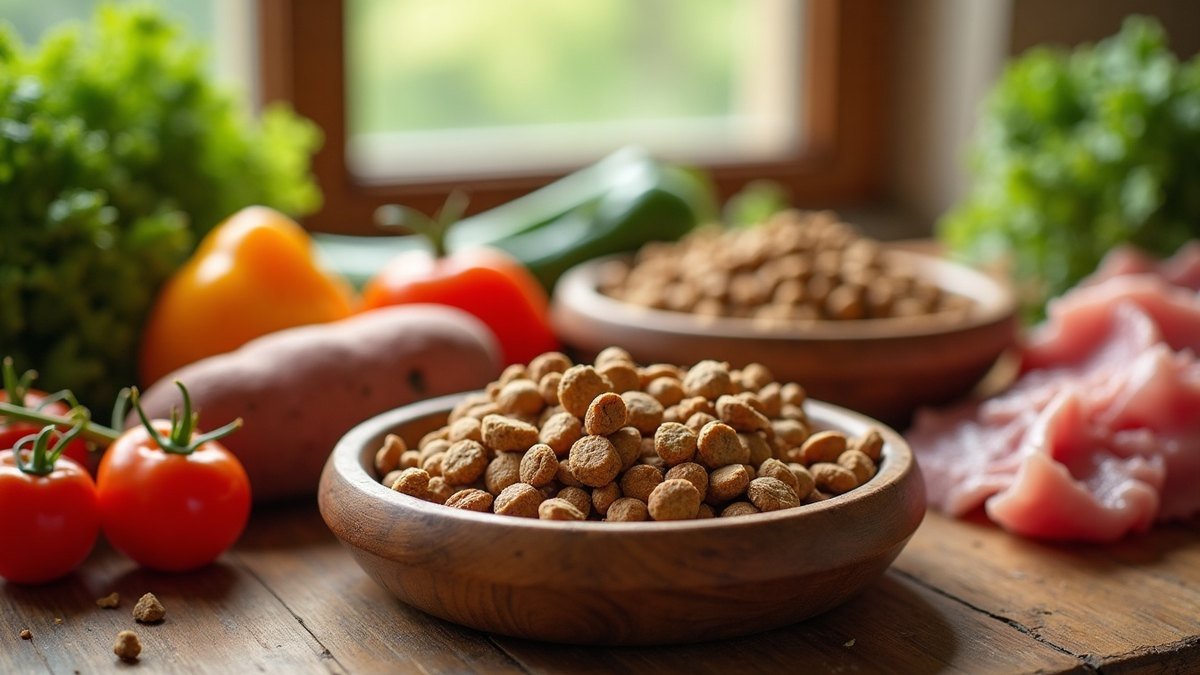
Let me start by clearing up what is in the bag, because the name is doing a lot of heavy lifting. Grain-free dog food simply leaves out grains like wheat, corn, rice, barley, and oats. It does not mean carbohydrate-free, which surprises many people. Those grains are replaced with other carbohydrate sources, most often peas, lentils, chickpeas, potatoes, or sweet potatoes. So a grain-free food can contain just as many carbohydrates as a traditional one, just from different plants.
This matters because the marketing often implies grain-free is low-carb or somehow closer to a wild, ancestral diet. Neither is necessarily true. The dog's nutritional needs are met by the overall balance of protein, fat, carbohydrates, vitamins, and minerals, not by the presence or absence of a single ingredient category. Understanding that grains are being swapped for legumes and tubers, rather than removed entirely, is the first step to seeing past the wolf on the package and judging the food on its actual merits.
Grain-free dog food: pros and cons at a glance
Here is a balanced summary of the main considerations, with the honest case for and against each. Use it as a map for the deeper discussion below, and as a starting point for a conversation with your vet.
| Consideration | The case for grain-free | The case against |
|---|---|---|
| Grain allergies | Helps dogs with a true grain allergy | Genuine grain allergies are quite rare |
| Digestion | May suit some sensitive dogs | Most dogs digest grains very well |
| Protein and palatability | Often higher protein, tasty | Traditional foods can match this |
| Ingredient variety | Novel carbs for elimination diets | Legumes raise their own questions |
| Heart health (DCM) | Not all grain-free is implicated | An ongoing safety concern exists |
| Cost | Premium options widely available | Usually more expensive, not always better |
| Marketing vs reality | Some excellent formulas exist | Hype often outpaces the evidence |
The 7 pros and cons to weigh
1. It helps dogs with a true grain allergy, but those are rare
Here is the most important myth to bust. Food allergies in dogs do exist, but grains are far from the most common trigger. When dogs do have food allergies, the usual culprits are animal proteins like beef, dairy, and chicken, not grains. A genuine grain allergy is uncommon, which means the vast majority of dogs eating grain-free food do not actually have the problem the food is supposedly solving. They are eating it because of marketing, not medical need.
For the small number of dogs with a confirmed grain sensitivity, grain-free can be a real help, and that is a legitimate use. The key word is confirmed. Diagnosing a food allergy properly requires a careful elimination diet guided by your vet, not a guess based on itchy skin. If you suspect a sensitivity, that diagnostic process matters more than the label, and my guide to the best dog food for sensitive stomachs walks through it.
2. Most dogs digest grains perfectly well
Despite the ancestral-diet marketing, dogs are not wolves, and they have evolved alongside humans to digest starches, including grains, quite efficiently. Whole grains like rice, oats, and barley are nutritious, providing energy, fiber, vitamins, and minerals, and most dogs thrive on them. The idea that grains are mere filler that dogs cannot use is simply not supported by how a dog's digestive system actually works. For the average healthy dog, grains are a perfectly good part of a balanced diet.
This is why removing grains offers no inherent benefit to a typical dog. If your dog is doing well, has a healthy coat, good energy, and firm stools on a food containing grains, there is no nutritional reason to switch. Change for the sake of a trend can introduce risk without reward. The smarter approach is to judge a food by your dog's actual health and by the quality of the overall formulation, not by whether it happens to contain rice.
3. Grain-free is often high in protein and very palatable
On the genuine plus side, many grain-free foods are formulated with higher protein content and tend to be quite tasty, which appeals to active dogs and picky eaters alike. Owners often report their dog enjoys the food and looks great on it, and for some dogs that is a real win. The category does include some excellent, thoughtfully made formulas from reputable companies that invest in nutrition science.
The catch is that none of these benefits are exclusive to grain-free. Plenty of traditional foods with grains are equally high in quality protein, equally palatable, and equally well formulated. So while a good grain-free food can absolutely serve a dog well, it is not delivering something that an equally good grain-inclusive food cannot. The presence or absence of grain is not what makes these foods good. The overall quality and balance is. Keep your eye on that, not the label.

4. Legumes and potatoes bring their own questions
When grains come out, something has to go in, and that something is usually peas, lentils, chickpeas, or potatoes. For dogs needing a novel carbohydrate during an elimination diet, this variety can be useful. But the heavy use of legumes in particular, sometimes called pulses, sits at the center of the heart-health concern researchers are investigating. So the very ingredients that replace grains have raised new questions rather than simply being a clean upgrade.
This is the heart of why grain-free is not automatically better. You are not removing carbohydrates, you are trading one carbohydrate source for another, and that trade has consequences worth understanding. None of this means legumes are poison, and they appear in many foods safely. But it does mean the simple story, grains bad, no grains good, falls apart under scrutiny. A dog's diet is a balance of many factors, and swapping one ingredient does not make the whole formula superior.
5. The DCM concern is real and still being studied
This is the big one, so let me explain it carefully. A number of years ago, the U.S. Food and Drug Administration began investigating reports of dilated cardiomyopathy, a serious heart disease often called DCM, in dogs eating certain diets, many of them grain-free and high in legumes. DCM weakens the heart muscle and can be fatal. The investigation noted an association with these diets, particularly those heavy in peas and lentils, though a definitive cause has not been established.
The science here is genuinely unsettled, and reputable experts continue to study it, so I will not overstate it either way. What I told clients is that this is a real enough concern to take seriously and to discuss with your vet, not a reason to panic if your dog is thriving. You can read the agency's own updates on its investigation into diet and canine DCM. If you feed grain-free, this is the single most important thing to understand.
6. Grain-free usually costs more, without guaranteed benefit
Grain-free foods generally sit at a premium price point, which makes sense given how they are marketed. For a dog who genuinely needs the diet, that cost is justified. For the majority of dogs who do not, you may simply be paying more for a benefit your dog does not require, and possibly taking on the unresolved DCM question in the bargain. A higher price tag is not proof of a better food, and the wolf on the bag does not improve the nutrition inside.
I always encouraged owners to spend their food budget where it actually helps. A well-formulated, complete and balanced food from a reputable company that employs veterinary nutritionists is worth far more than a pricey bag chosen for its label. If money is tight, do not feel pressured into grain-free out of guilt. Consistency with a quality, appropriate diet matters more, a principle that applies just as much to feeding through every life stage, including my guidance on caring for senior dogs.
7. The marketing often outpaces the evidence
The final thing to weigh is the gap between what grain-free food is sold as and what the science supports. The category exploded on the strength of appealing but oversimplified ideas, dogs are wolves, grains are filler, natural is better, none of which hold up well to scrutiny. That does not make every grain-free food bad, but it does mean you should treat the marketing with healthy skepticism and look past the imagery to the actual formulation and your dog's actual health.
The dogs I saw do best were not on whatever diet was trending. They were on appropriate, balanced foods chosen thoughtfully for their individual needs, with their owners watching real outcomes like coat, energy, weight, and stool quality. Let evidence and your veterinarian guide you, not a clever package. A food earns its place through how your dog actually does on it over months, not through how compelling its story sounds on the shelf.
So who should consider grain-free?
After all that, you might wonder if grain-free is ever the right call, and it is, for the right dog. A dog with a veterinarian-diagnosed grain allergy or intolerance is the clearest candidate, since for them, removing grains genuinely resolves a problem. Some dogs on elimination diets benefit from the novel carbohydrate sources during the diagnostic process. In these specific, vet-guided situations, grain-free is a useful tool rather than a trend.
For the average healthy dog with no diagnosed grain issue, there is no compelling reason to choose grain-free, and the unresolved DCM question is a reason for caution. If you already feed grain-free and your dog is thriving, do not panic, but do raise it at your next vet visit and consider whether the diet truly serves a need. The decision belongs in a conversation with your vet, weighed against your individual dog, which also pairs naturally with planning for health costs like understanding whether pet insurance is worth it.
How to read a dog food label past the buzzwords
The front of a dog food bag is marketing, so the real information lives on the back, and learning to read it frees you from the hype entirely. Start with the nutritional adequacy statement, the small line confirming the food is complete and balanced for a specific life stage, ideally backed by feeding trials. That single sentence tells you more about whether a food will nourish your dog than any wolf illustration or the words natural, holistic, and premium, which have no strict regulated meaning.
Then read the ingredient list with a clear eye. Named proteins like chicken, beef, or salmon near the top are a good sign, and a recognizable, sensible list beats a label crammed with exotic-sounding add-ins meant to impress shoppers. In grain-free foods, notice how high peas, lentils, and other legumes appear, since that is exactly the pattern the heart-disease investigation focused on. Words like grain-free and ancestral are positioning, not nutrition, so let the adequacy statement and the actual ingredients guide you.
Most importantly, look beyond the bag to the company behind it. Reputable manufacturers employ qualified veterinary nutritionists, conduct feeding trials, own or rigorously control their manufacturing, and answer questions about their formulas openly. A clever label on a food from a company that does none of that is far less trustworthy than a plain bag from one that does. Judging the maker, not the marketing, is one of the most useful skills a dog owner can develop.
What veterinary nutritionists tend to recommend
When you set the trends aside and ask the specialists, the guidance becomes refreshingly simple. Board-certified veterinary nutritionists generally recommend choosing a complete and balanced food from an established company with strong quality control and nutritional expertise, suited to your dog's life stage and any health conditions. They focus on the overall quality and appropriateness of the diet rather than on whether a single ingredient category is present or absent, which is the opposite of how grain-free is usually marketed.
On grain-free specifically, the cautious consensus has been to avoid unnecessary grain-free, legume-heavy diets for dogs without a diagnosed need, given the unresolved DCM question, while continuing to study it. That does not mean fear, it means defaulting to well-established formulas unless there is a real reason to do otherwise. The takeaway I always shared is that the safest, smartest path is a conversation with your own vet, who knows your dog, rather than a decision driven by a package or an internet trend.
Common grain-free myths, debunked
So much confusion around this topic comes from a few sticky myths, so let me take them on directly. The first is that dogs are basically wolves and should eat like them. Dogs have spent thousands of years evolving alongside us and have adapted to digest starches, including grains, efficiently. They are not wolves in the dietary sense, and the ancestral-diet framing is marketing, not biology. A balanced modern diet, with or without grains, suits the domestic dog far better than a romanticized wild menu.
The second myth is that grains are cheap filler with no nutritional value. In reality, whole grains provide usable energy, fiber that supports digestion, and a range of vitamins and minerals. They earn their place in a formula rather than padding it. A related myth is that grain-free automatically means low-carbohydrate or higher quality, when grain-free foods simply swap grains for other carbs like peas and potatoes and can be just as carb-rich, and no better, than a traditional food.
The last myth worth busting is that itchy skin or an upset stomach means your dog has a grain allergy. Food allergies in dogs are uncommon overall, and when they occur, animal proteins are the usual trigger, not grains. Itch and digestive trouble have many causes, most unrelated to grains. Chasing a grain allergy on a hunch usually wastes time and money. If you suspect a food reaction, a vet-guided elimination diet is the only reliable way to find the real culprit.
Frequently asked questions
Is grain-free dog food bad for dogs?
Grain-free food is not inherently bad, but it is not inherently good either, and it is unnecessary for most dogs. The honest position is nuanced. For a dog with a diagnosed grain allergy, it can be genuinely helpful. For the average dog, it offers no proven benefit, costs more, and carries an unresolved concern about a possible link to heart disease in some formulas. The best move is not to assume grain-free is healthier, but to choose a quality, balanced food suited to your individual dog with your veterinarian's input.
What is the link between grain-free food and heart disease?
The U.S. Food and Drug Administration investigated reports of dilated cardiomyopathy, a serious heart muscle disease, in dogs eating certain diets, many of them grain-free and high in legumes like peas and lentils. The investigation found an association but has not proven that these diets directly cause the disease, and the science remains under active study. It is a real enough concern to discuss with your vet, especially if you feed a grain-free, legume-heavy food, but not a reason for panic if your dog is currently healthy and thriving.
Do dogs actually need grains in their diet?
Dogs do not strictly need grains specifically, but they do need a balanced source of carbohydrates and the nutrients grains provide, and grains fill that role very well. Dogs digest grains efficiently and benefit from the energy, fiber, and micronutrients they offer. So while a properly formulated grain-free diet can also meet a dog's needs using other carbohydrate sources, there is no nutritional reason to avoid grains for a typical dog. The idea that grains are useless filler is a marketing myth rather than a fact about canine nutrition.
How do I know if my dog has a grain allergy?
You cannot know from guessing, and that is the key point. Symptoms people blame on grains, like itchy skin or digestive upset, are far more often caused by other proteins or by non-food issues entirely. A true food allergy is diagnosed through a carefully controlled elimination diet supervised by your veterinarian, feeding a limited or novel ingredient food for several weeks and watching for change. Random food switching only muddies the picture. If you suspect an allergy, talk to your vet about proper diagnosis rather than assuming grains are the problem.
Should I switch my dog off grain-free food?
Do not make a sudden change based on fear, but do have the conversation with your veterinarian. If your dog has no diagnosed need for grain-free and is eating a legume-heavy formula, your vet may suggest moving to a well-established grain-inclusive food from a reputable company, given the unresolved heart-disease question. If you do switch, transition gradually over a week or so to protect your dog's stomach. The right answer depends on your individual dog, which is exactly why this belongs in a vet discussion rather than a snap decision.
Is grain-free food more expensive, and is it worth it?
Grain-free foods generally do cost more than comparable traditional formulas, partly because of how they are marketed and positioned as premium. Whether that extra cost is worth it depends entirely on your dog. For a dog with a veterinarian-diagnosed grain sensitivity, the price buys a real solution and is justified. For the average dog with no such need, you are usually paying more for a benefit your dog does not require, and possibly taking on the unresolved heart-disease question in the process. Spend your food budget where it actually helps, on a well-formulated, appropriate diet from a reputable company, rather than on a label, and discuss the choice with your vet.
The bottom line
Grain-free dog food is one of the most marketed and least understood choices in the pet aisle, and the truth sits calmly between the hype and the panic. For the small number of dogs with a diagnosed grain sensitivity, it is a useful tool. For most dogs, it is an unnecessary premium choice that swaps grains for legumes and carries a real but unresolved question about heart health. Neither miracle nor poison, just a category to judge on its actual merits.
The best thing you can do is step back from the wolf on the bag and have an honest conversation with your veterinarian about your individual dog's needs. Watch your dog's real health, coat, energy, weight, and digestion, and let evidence guide you rather than marketing. That clear-eyed approach will serve your dog far better than any trend. For more straight-talking nutrition guidance, browse the rest of the Qaliona nutrition section and feed with confidence.