
I will never forget the kitten who came in scratching so hard she had rubbed a bald patch behind her ears, while her owner swore up and down she had never seen a single flea. That is the cruel trick of these little parasites. Cats are fastidious groomers, so they swallow most of the evidence before you ever spot it, and by the time you notice the scratching, the flea-dirt specks, or that one dark dot sprinting across a pink belly, the problem is usually bigger than it looks. I have watched far too many people waste weeks and money on products that were never going to work.
So let me save you that frustration. I spent more than a decade as a veterinary technician, applying flea treatments to squirming cats, fielding panicked phone calls about infestations, and cleaning up after the occasional product mishap. Below are the eight cat flea treatments I trust most, why each one earns its place, and the part most people skip: how to actually clear an infestation instead of just chasing the fleas you can see. One warning up front that I will repeat later because it genuinely saves lives. Never put a dog flea product on a cat. Some are toxic to cats and can kill them.
The short answer
- For most cats, my top pick is Revolution Plus, a vet-grade topical that kills fleas while also covering worms, ear mites, and ticks in one monthly dose.
- The best budget choice is Capstar, an inexpensive oral tablet that kills adult fleas within hours when you need a fast knockdown.
- For the longest premium protection, Bravecto Plus gives you two full months from a single application.
- The product matters, but so does the cleanup. Treat every pet in the home and the environment at the same time, or the fleas just bounce back.
How fleas actually take over a cat
Here is what I wish every owner understood before they panic. The adult fleas jumping on your cat are only a sliver of the problem, often less than five percent of the total population in your home. The rest are eggs, larvae, and pupae tucked into carpet fibers, bedding, and the cracks in your floor, quietly maturing and waiting to hop aboard. That is why squashing the bugs you see does almost nothing. You are bailing a boat without plugging the hole.
What modern flea treatments do well is break that cycle. The good ones either kill adult fleas fast, sterilize the eggs and larvae so the next generation never matures, or both. When you treat the cat consistently for several months and treat the environment alongside, the whole population collapses. Skip a month, treat only one of three cats, or ignore the carpet, and you hand the fleas exactly the foothold they need to come roaring back. Consistency is the entire game here.
How I chose these eight treatments
I did not pull these names off a bestseller list. Every product here met a few standards I cared about on the clinic floor. First, it is labeled and dosed specifically for cats, because feline safety is non-negotiable with flea control. Some ingredients that are perfectly safe on a dog are dangerous on a cat, a point the ASPCA Animal Poison Control Center sees the consequences of every single day.
Second, each treatment has a real track record of working, not just a clever package. Third, I leaned toward products that veterinarians actually stock and recommend, since that tells you something about both safety and effectiveness. Finally, I made sure there was a spread of prices and formats. A treatment you cannot afford to repeat every month, or one your cat fights you on so hard you give up, is not the right treatment for your household, because with fleas the follow-through matters more than anything else.
Best flea treatment for cats at a glance
If you only have a minute, this table sums up where each product fits. Prices are rough ranges for a standard multi-dose pack and will vary by retailer, cat weight, and pack size, so treat them as ballpark rather than gospel.
| Product | Best for | Key feature | Price range |
|---|---|---|---|
| Revolution Plus Top Pick | Most cats, all-in-one cover | Fleas plus worms, mites, ticks | $70–$110 |
| Capstar Budget Pick | Fast emergency knockdown | Kills adult fleas in hours | $25–$40 |
| Bravecto Plus Premium Pick | Set-and-forget protection | Two months from one dose | $90–$130 |
| Frontline Plus for Cats | Reliable monthly basics | Kills fleas, eggs, and larvae | $35–$60 |
| Advantage II for Cats | Flea-only households | Kills multiple flea life stages | $35–$55 |
| Seresto Collar for Cats | Long, low-fuss coverage | Up to 8 months per collar | $50–$70 |
| Cheristin for Cats | Fast topical kill | Starts killing within 30 minutes | $45–$70 |
| Catego for Cats | Value monthly topical | Kills fleas, ticks, and lice | $30–$50 |
The 8 best flea treatments for cats
1. Revolution Plus Top Pick
This is the product I reached for most when an owner wanted one treatment to handle nearly everything, and it is where I would start for a typical cat. It is a monthly topical you apply between the shoulder blades, and beyond killing fleas it also tackles ear mites, roundworms, hookworms, ticks, and heartworm prevention. For an indoor-outdoor cat especially, having all of that covered in a single small dose is genuinely hard to beat, and it is why I consider it the best overall pick here.
You buy it through your veterinarian, which is a feature rather than a hurdle, because it means the dosing is matched to your cat's weight and someone has confirmed it is appropriate. It is not the cheapest option on this list, but the breadth of protection earns the price for most households. If you can only commit to learning one product and using it well every month, this is the one I would point you to first.
2. Capstar Budget Pick
When a cat walks in crawling with fleas and the owner needs relief right now, this is my go-to, and it costs almost nothing. Capstar is a single oral tablet that starts killing adult fleas within about thirty minutes and clears most of them within hours. I have handed it out countless times for that immediate knockdown, especially for a miserable cat who cannot wait for a topical to spread and start working.
The catch is that it is a short-term tool, not a plan. It kills the adult fleas on the cat that day and then wears off, so it does nothing for the eggs in your carpet or the fleas that hatch tomorrow. I always paired it with a longer-acting product like my top pick. Think of Capstar as the fire extinguisher you grab for the emergency, then follow with real prevention. It is cheap, widely sold on Amazon, and worth keeping on hand.
3. Bravecto Plus Premium Pick
If you are the kind of person who forgets the monthly dose, or you simply want the longest stretch of protection from a single application, Bravecto Plus is the premium answer. It is a topical that delivers up to two full months of flea and tick control from one dose, and the Plus version also covers heartworm prevention and intestinal worms. For busy households, halving how often you have to remember to treat is a real quality-of-life upgrade.
It is the priciest option on this list per pack, and like the other vet-grade products you buy it through your veterinarian so the dose fits your cat. But when you do the math per month, the cost gap narrows, and the convenience and reliability are worth a lot to people who have lived through a stubborn infestation. For a cat who hates being handled, fewer applications a year is also kinder on both of you.
4. Frontline Plus for Cats
Frontline Plus is the dependable old workhorse, and there is a reason it has stayed on shelves for so long. It is a monthly topical that kills adult fleas and, importantly, also kills flea eggs and larvae, which helps break the life cycle in your home rather than just clearing the cat. It also kills ticks, making it a sensible pick for cats who venture outdoors or share a home with a dog who does.
You can buy it over the counter without a vet visit, which makes it an easy and accessible starting point for a lot of households. Just be meticulous about choosing the cat formula and the correct weight range, never a dog version. It is widely stocked on Amazon and in pet stores, and for a straightforward, proven monthly routine it remains a solid, affordable choice that I happily recommended for years.
5. Advantage II for Cats
If fleas are your only concern and you are not worried about ticks or worms, Advantage II is a clean, focused choice. It is a monthly topical that kills fleas at multiple life stages, including the eggs and larvae, so it chips away at the population hiding in your environment as well as the adults on your cat. For a strictly indoor cat with a flea problem and no other parasite worries, that targeted approach is often all you need.
It is over-the-counter, reasonably priced, and reliable, which makes it a popular pick among the owners I worked with. As always, match the dose to your cat's weight and use the feline formula. If your situation later expands to include ticks or worm coverage, you may want to step up to one of the broader-spectrum products above, but as a dedicated flea fighter for an indoor cat, Advantage II does its one job well.
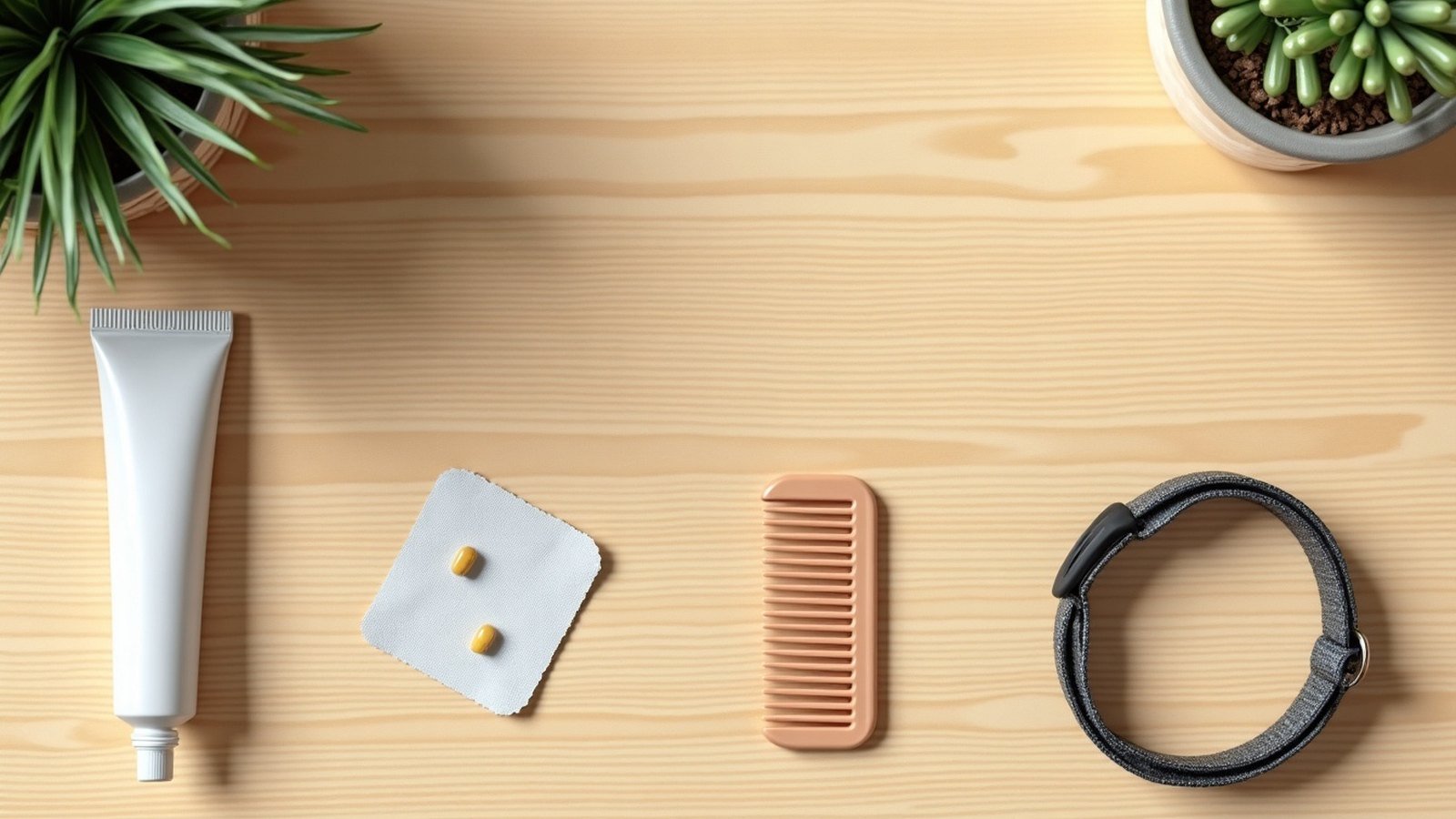
6. Seresto Flea & Tick Collar for Cats
For owners who dread the monthly routine, the Seresto collar is a different way to play the game. Once fitted, it releases its active ingredients slowly and provides up to eight months of flea and tick protection from a single collar. That set-and-forget quality is its biggest selling point, and I knew plenty of owners who found it far easier to keep up with than a dose they had to remember every four weeks.
A few honest caveats. It needs to be fitted snugly but with the safety release that lets a cat break free if the collar snags, which matters enormously for climbing, curious cats. Make sure you buy the genuine cat version, since counterfeits circulate online, so stick to reputable sellers. For an indoor-outdoor cat who tolerates a collar, the eight-month coverage is a genuinely convenient option that takes a lot of mental load off your plate.
7. Cheristin for Cats
Cheristin is a topical built specifically for cats, with no dog version to mix up, which I always appreciated from a safety standpoint. Its claim to fame is speed. It begins killing fleas within about thirty minutes and knocks down the majority within a couple of hours, then keeps working through the month. For a cat in active misery, that fast onset brings welcome relief without needing a separate emergency pill.
The applicator is designed to part the fur and deliver the dose right to the skin at the base of the neck, which helps it work as intended and stay out of your cat's reach for grooming. It is a monthly product, sits in a reasonable mid-price range, and is easy to find on Amazon. If you want a fast-acting, cat-only topical that combines the urgency of Capstar with month-long staying power, Cheristin is well worth a look.
8. Catego for Cats
Catego rounds out the list as a strong value monthly topical that does not skimp on coverage. It kills fleas, ticks, and chewing lice, and it works fast on adult fleas, which makes it a versatile pick for households that want broad protection without stepping up to vet-grade pricing. I found it a useful option for owners who wanted more than a flea-only product but were watching their budget closely.
Like every topical here, use the feline formula, match it to your cat's weight, and apply it directly to the skin rather than the fur. It is sold over the counter and online, so it is easy to get hold of. For a cat who needs solid flea and tick coverage at a friendlier price, Catego is a dependable middle-ground choice that earns its place on this list.
Topical, oral, or collar: which format is right?
People often ask me which kind of flea treatment is best, and the honest answer is that the best format is the one you will actually use correctly. Topicals, the little squeeze-on tubes, are the most familiar and cover the widest range of products. They work well as long as you part the fur and get the liquid onto the skin, not the coat, and keep your cat from licking the spot or grooming a housemate until it dries. For most cats, a good monthly topical is the backbone of flea control.
Oral products like Capstar shine when you need speed and certainty, because there is no application to mess up and nothing for the cat to lick off. The trade-off is that the fast oral knockdowns are short-acting, so they pair best with a longer product. Collars like Seresto sit at the other end, trading the monthly ritual for many months of hands-off coverage, which is wonderful for forgetful owners but depends on your cat tolerating the collar. There is no single winner here, only the right fit for your cat and your habits.
Never use a dog flea product on a cat
I am putting this in its own section because it is the single most important warning in this entire article, and I have seen the heartbreak when it gets ignored. Many dog flea products contain permethrin or related pyrethroids at concentrations that are perfectly safe for dogs but are toxic, sometimes fatally so, to cats. A cat exposed to a dog product can start tremoring, twitching, and seizing within hours, and without fast emergency care it can die. This is not a rare freak accident. It is one of the more common feline poisonings vets see.
So the rules are simple and absolute. Only ever use a product labeled for cats, never a dog version split into a smaller dose. If you have both a dog and a cat, keep them separated after you treat the dog until the application has fully dried, because the cat can pick up enough by grooming the dog to get sick. And if your cat is ever accidentally exposed and starts acting strange, treat it as an emergency and call your vet or a poison control line immediately. When in doubt, read the label twice and ask your vet which product is safe for your specific cat.
Treat the home and every pet, not just the cat
This is the step that separates the people who clear their infestation from the people who fight the same fleas for months. Because most of the flea population lives in your home rather than on your cat, treating the cat alone leaves the eggs and larvae in your carpet free to hatch and reinfest. You can do everything right with a great product and still feel like you are losing if you ignore the environment.
So work on two fronts at once. Vacuum thoroughly and often, especially carpets, rugs, and the cracks where pets sleep, and empty the canister or bag outside each time so the fleas do not crawl back out. Wash all pet bedding in hot water. Many owners also use a vet-recommended household flea spray or treatment for heavier infestations. Just as crucially, treat every pet in the home on the same schedule, not only the itchiest one, because the fleas will simply migrate to whichever animal you skipped. If your cat's scratching has them stressed and acting out, you may also notice them avoiding the box or fighting over territory, which I cover in my guide to solving cat litter box problems.
When the itching is something more
Flea control fixes a lot, but not everything, and I want you to know where the line is. A cat with a few fleas who responds well to treatment is a routine fix. The picture changes when symptoms pile up or persist. Relentless scratching that breaks the skin, large bald patches, scabby bumps along the back and neck, pale gums in a small kitten, or a cat who keeps reacting despite consistent, correct treatment all deserve a real conversation with your veterinarian. Some cats develop a genuine allergy to flea saliva and need extra help calming the inflammation.
Fleas can also carry other problems, like tapeworms a cat swallows while grooming, or anemia in a heavily infested kitten. And not every itchy, unsettled cat is reacting to fleas at all, so if treatment is not helping, it is worth ruling out other causes rather than buying yet another product. If your cat has also been bringing up hairballs or food, that is its own thread worth pulling, and I walk through the common reasons in my piece on why your cat may be throwing up. Trust what you know about your cat's normal, and get persistent or severe signs checked.
Frequently asked questions
How fast do flea treatments work on cats?
It depends on the product. A fast oral like Capstar starts killing adult fleas within about thirty minutes, and some topicals such as Cheristin begin working almost as quickly. Monthly topicals generally clear the adult fleas on your cat within a day or so and then keep working through the month. The infestation in your home, though, takes longer to disappear. Even with everything done right, plan on a couple of months of consistent treatment to fully break the flea life cycle and stop seeing new fleas.
Do indoor cats really need flea treatment?
More often than people expect, yes. Fleas hitchhike indoors on your shoes, on your clothes, on a dog who goes outside, and on any visiting pet. A strictly indoor cat is at lower risk, but lower is not zero, and an infestation in a closed home can be miserable to clear once it takes hold. I usually suggest at least seasonal protection for indoor cats in flea-heavy regions, and year-round coverage if you have other pets coming and going. Talk to your vet about the right approach for your specific household.
Are natural or home remedies a safe alternative?
I understand the appeal, but I urge real caution here. Many popular natural flea remedies are ineffective, and some are genuinely dangerous to cats. Essential oils in particular, including tea tree, eucalyptus, and several others, can be toxic to cats whose livers process these compounds differently than ours. A flea comb and diligent vacuuming are fine, safe supportive tools, but they will not clear an infestation on their own. For actual flea control, stick to products proven and labeled for cats, and check anything unfamiliar with your vet first.
Can I use the same flea product on my cat and my dog?
No, and this is worth being firm about. Never split a dog product into a smaller dose for a cat, because some dog ingredients are toxic to cats even at reduced amounts. Always buy a product specifically labeled for cats and dosed for your cat's weight. If you have both species, treat each with its own appropriate product, and keep them apart after treating the dog until the application has dried so your cat cannot pick it up by grooming. When unsure, your vet can recommend a safe combination for a mixed-pet home.
How often should I treat my cat for fleas?
Follow the label for whichever product you choose. Most topicals and oral preventives are monthly, the longest-acting topicals stretch to about two months, and the Seresto collar covers up to eight months from one fitting. The key with all of them is not skipping. Fleas reproduce fast, and one missed month can undo weeks of progress. If you live somewhere fleas are active year-round, consistent year-round treatment is usually the simplest way to stay ahead of them rather than reacting to each new outbreak.
The bottom line
If your cat has been scratching and you have been quietly dreading another losing battle, take heart, because the vast majority of these cats clear up completely with the right product and a little persistence. Start with my top pick, Revolution Plus, for broad all-in-one protection, keep inexpensive Capstar on hand for an emergency knockdown, and reach for Bravecto Plus when you want the longest stretch between doses. Whatever you choose, use the cat formula, treat the home and every pet together, and never reach for a dog product.
You do not have to figure this out alone. Pick one product from this list, commit to treating consistently for a couple of months, and watch your cat settle back into their comfortable, unbothered self. If the itching persists or your cat seems off despite doing everything right, call your veterinarian without second-guessing. And if you want to keep your home and cat happier on other fronts, my guide to stopping a cat from scratching the furniture and my honest take on whether pet insurance is worth it are both good next reads. A flea-free, comfortable cat is absolutely within reach.